
Introduction
When planning a furniture or interior project, selecting the right board material plays a crucial role in durability, performance, and long-term value. Two of the most popular choices today are PVC Boards and WPC Boards. While both offer excellent alternatives to traditional plywood, understanding their differences can help you make a better decision.
What Are PVC Boards?
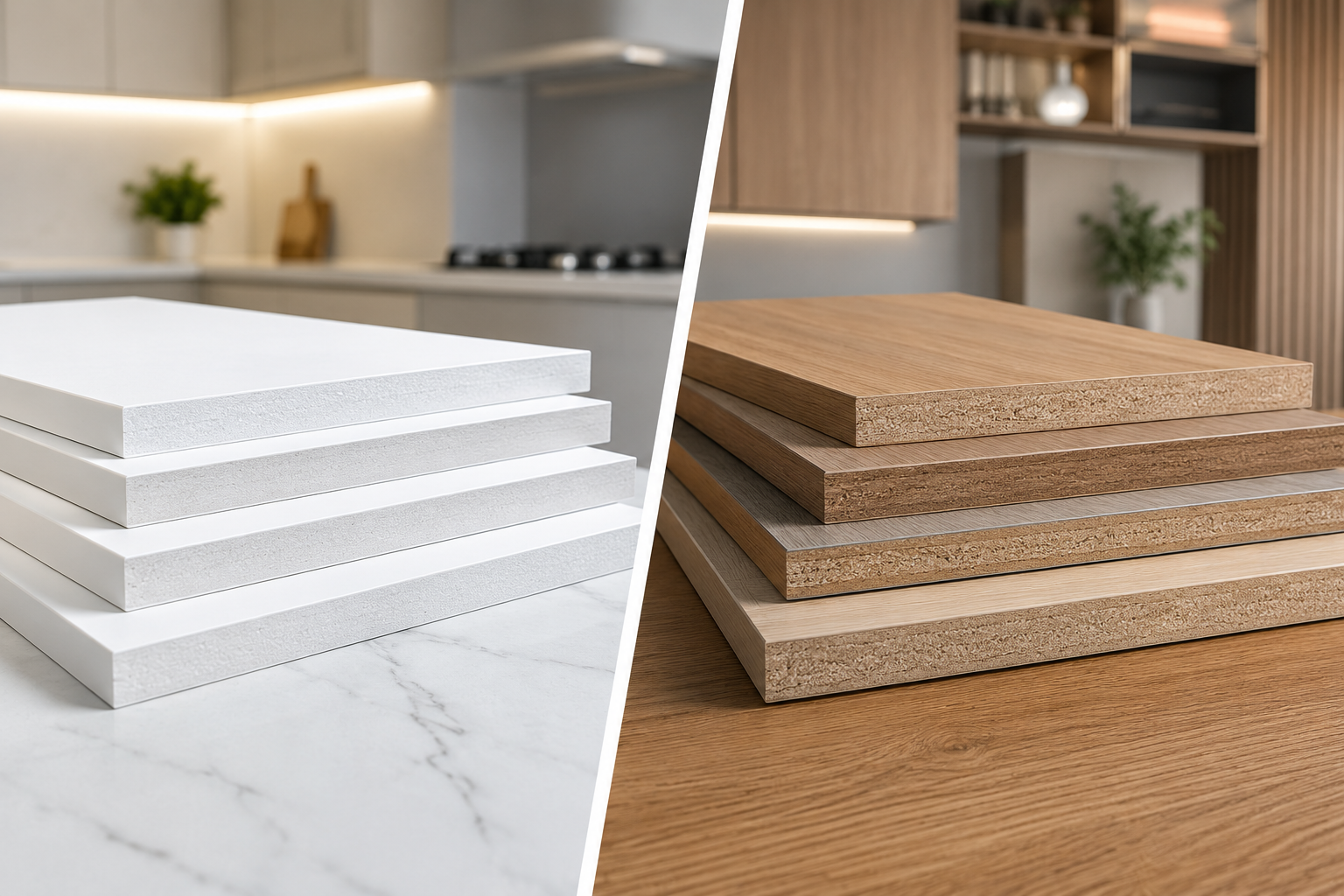
PVC (Polyvinyl Chloride) Boards are engineered boards known for their lightweight structure, waterproof properties, and resistance to termites and moisture. They are commonly used for:
- Modular Kitchens
- Wardrobes
- Cabinets
- Partitions
- Display Units
What Are WPC Boards?
WPC (Wood Plastic Composite) Boards combine wood fibers and polymers to create a durable material that offers the workability of wood with enhanced resistance to moisture and pests.
Popular applications include:
- Furniture Manufacturing
- Kitchen Cabinets
- Wardrobes
- Commercial Interiors
- Wall Cladding
| Feature | PVC Boards | WPC Boards |
|---|---|---|
| Weight | Lightweight | Heavier |
| Strength | Good | Higher |
| Screw Holding | Good | Excellent |
| Moisture Resistance | Excellent | Excellent |
| Furniture Applications | Excellent | Excellent |
| Structural Stability | Good | Superior |
Which Should You Choose?
For lightweight furniture and interior applications, PVC Boards are often preferred. For projects requiring higher structural strength and screw-holding capacity, WPC Boards are an excellent choice.
Conclusion
Both materials offer significant advantages over conventional wood products. The right choice depends on your application, budget, and performance requirements.